When it comes to icebreakers, the telephone game is a personal favorite. If you haven’t played before, the first person whispers a message to the next, who then whispers it to the next, and so on until it makes its way through the entire group. No repeats and no clarifications are allowed. By the time the final person shares the message out loud, it has usually changed, often in funny or unexpected ways. It’s a simple but powerful illustration of how easily information drifts or degrades as it moves through people or tools.
Like the telephone game, collaborative analytics can quietly unravel as work travels from tool to tool and team to team. In this issue, we explore strategies for combatting common problems like fragmented workflows, data silos, and instinct-driven experimentation. The tips you find below are sure to help you keep your insights intact from the first whisper to the final decision.
Enjoy this month's issue!
The integration imperative: Preserving analytical reasoning across JMP, Python, R, and beyond
In this blog, Principal Systems Engineer (and former real-life rocket scientist) Kemal Oflus explores the hidden dangers of fragmented analytics. As modern analytics teams run analyses through an ever-expanding mix of tools, including Python, R, Excel, JMP, and cloud-based analytics platforms, critical insights quietly slip through the cracks.
Learn how to build an integrated analytics architecture that lets each tool do what it does best while preserving the analytical thread as your workflow moves across teams, tools, and decisions.
Statistical designs are the tools you need to overcome your data-foraging instincts
Despite the proven power of statistical design of experiments for solving problems, many scientists still rely on instinct-driven, inefficient experimentation. In this article from Phil Kay, we learn how this “hunter-gatherer” mindset can sabotage good science. The good news is that innovations like automated experimentation and Bayesian optimization are helping to turn the tide. Along the way, Kay shares stories from pioneers, such as George Box, and offers insights into why some designs succeed while others fail.
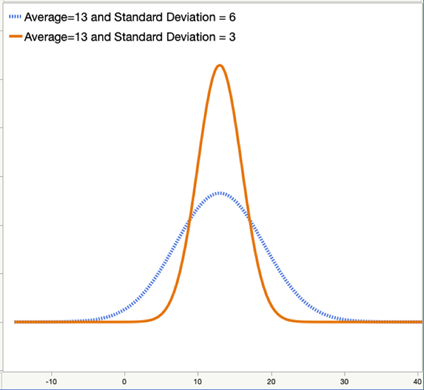
In this lesson from the Statistics Knowledge Portal, we learn the basics of standard deviation, how it’s calculated, and why it’s essential for comparing groups, spotting outliers, and assessing process stability.
Why data visualization is so important in the age of AI
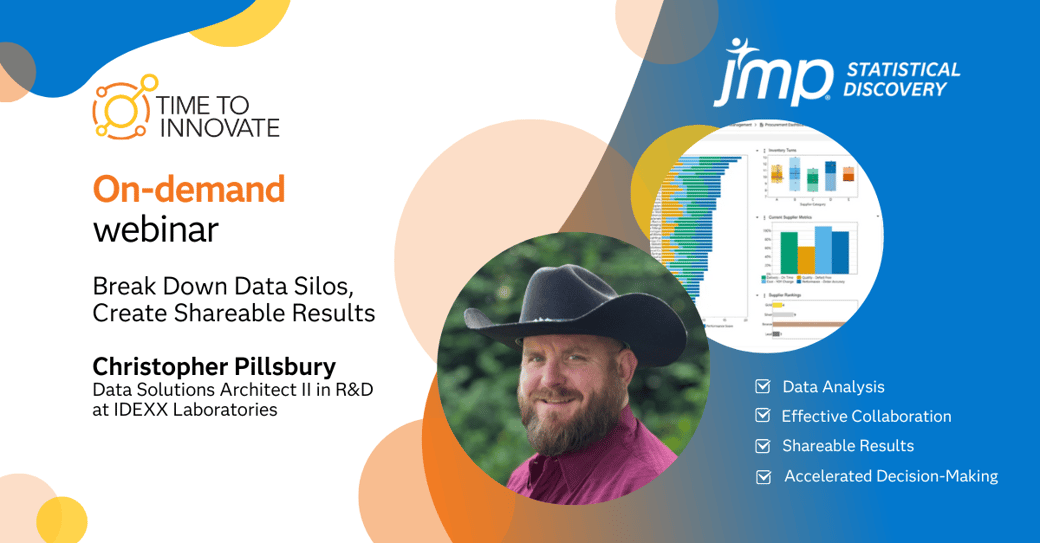
Too often, valuable insights get trapped in spreadsheets, homegrown tools, or team-specific formats, slowing down collaboration and putting institutional knowledge at risk when individuals leave the organization. To stay aligned, teams need data that’s easy to understand, easy to share, and ready to use.
In this on-demand webinar, IDEXX Laboratories Data Solutions Architect Christopher Pillsbury shows you how to transform complex data into clear results, share analyses without losing context or precision, and retain critical knowledge even as roles and teams evolve.
A best-in-class analytics conference, hosted by JMP
Discovery Summit is a best-in-class analytics conference bringing together innovators, practitioners, and thought leaders from around the globe. Past events have featured plenary talks from Lucy Cooke, Hannah Fry, Malcolm Gladwell, and other global leaders in technology, science, and analytics.
Breakout sessions offer practical tips and best practices in analytics and are led by experts from some of the most respected organizations in the industry. You’ll return home inspired to spread analytic excellence throughout your organization.
Discovery Summit events take place around the world, with conferences held in the Americas, Asia, and Europe.
JMP and all other JMP Statistical Discovery LLC product or service names are registered trademarks or trademarks of JMP Statistical Discovery LLC in the USA and other countries. ® indicates USA registration. Other brand and product names are trademarks of their respective companies.
JMP Statistical Discovery LLC, 920 SAS Campus Drive, Cary, NC, 27513, USA
Your Subscription You are receiving this email because you have subscribed to Analytics Advantage. To stop these emails, visit our unsubscribe page, and enter the email address associated with your subscription:



.png?width=280&upscale=true&name=users-love-us%20(2).png)